

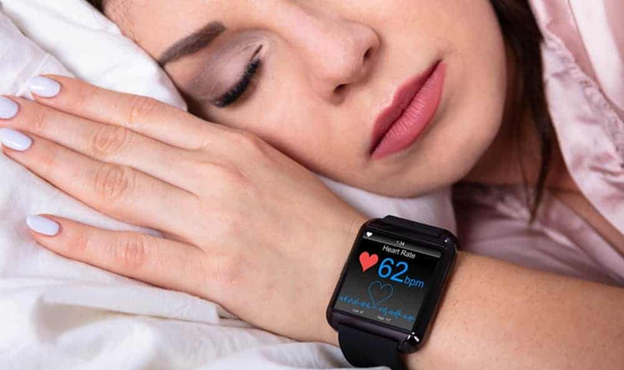
Due to the growing awareness of the role of sleep in overall well-being and productivity, the demand for smartwatches that effectively track sleep has been increasing at an alarming rate. Luckily, by 2025, you will not have to buy a wearable costing hundreds of dollars to have a meaningful experience with sleep-tracking. Even better smartwatches are available for under $150, providing quality data such as sleep duration, sleep stages (light, deep, and REM), heart rate data at rest, and recovery information. This guide outlines what to look for, sleep tracking information, and key features to consider when selecting a budget-friendly sleep tracker model.
Why Sleep Tracking Matters
Sleep is a source of physical rest, mental clarity, and long-term health. A smartwatch that monitors sleep provides you with information about the quality of your sleep, including how and when you wake at night, the amount of deep versus light sleep, and the behavior of your heart rate and blood-oxygen levels throughout your sleep. Such data points will help identify trends and inform lifestyle changes (such as adjusting bedtime, reducing caffeine intake, or improving your bedroom environment) and assess whether the adjustments are effective. Even a basic smartwatch can be useful for long-term sleep monitoring, providing you with information rather than just the number of hours.
Sensor Technology and Sleep Monitoring Accuracy
Sleep tracking requires the quality of sensors and the algorithms that interpret sensor data to be accurate. These elements include an optical heart-rate sensor (to measure the number of beats per minute), SpO 2 or blood-oxygen monitoring (to detect drops or interruptions), and motion sensors (to detect movement or awakenings). Although the more expensive models can provide full polysomnography details, sub-$150 smartwatches can offer believable accuracy to the average user. Budget smartwatch reviews highlight that a growing number of smartwatches now feature a dedicated sleep mode or sleep analysis function, which logs heart rate variability, records respiratory rate, and tracks time spent in each sleep phase. The only thing that counts is that the device monitors several nights, identifies abnormalities, and provides you with practical feedback.
What to Expect Under $150
Smartwatches in this price range will typically offer basic sleep tracking along with other fitness features. Most of them are used with companion apps to show sleep summaries, time sleeping, wake-ups, and an overall score of how well one slept. Others can have sophisticated features such as on-wrist temperature monitoring, snore sensors, or recovery scores. The battery life tends to increase at this level since charging is performed less frequently, resulting in fewer disturbances to the night monitors. Budget models typically do not include ultra-premium features such as ECG or precise multi-band GPS, although their sleep tracking capabilities are generally adequate for most consumers. The 2025 guides illustrate a variety of models with scores below 100-150 that have good results in terms of sleep monitoring and general health measures.
Comfort, Fit and Wearability for Night Use
As sleep is the parameter a person is monitoring, comfort should be the priority. A too-thick, heavy, or scratchy smartwatch on your wrist will disrupt your regular sleep and distort findings. Look for watches that are made from lightweight materials, feature easy-to-adjust straps made of silicone or fabric, and fit well, ensuring the sensors are in good contact with your skin. If you toss and turn, a strap that keeps the watch stable overnight minimizes false readings. Moreover, the functions such as night-mode display (low or off when going to sleep) avoid undesirable light. Many users claim that they can achieve better sleep tracking results when the watch is worn tightly, a notch tighter than at other times of day.
Battery Life and Overnight Monitoring
To achieve good sleep tracking, the watch must have a time span of at least an overnight period without needing to recharge, preferably extending to the following day. A low battery alert or a dead watch will provide no information on that night. In 2025, wearable smartwatches in the budget category will likely offer a battery life of 5 to 10 days, or sufficient to monitor the entire night and provide 24-hour wear. When comparing smartwatches, it is essential to consider whether the manufacturer prioritizes sleep mode battery performance or nightly continuous monitoring. Mathis, even an average battery life will lower the chances of you missing a night of wearing the battery as you get to sleep and realize that it is running low, and thus you will not be able to continue with your streak of tracking.
App Ecosystem, Data Insights and Usefulness
The smartwatch is just as useful as the application and data it displays. In the companion app, you can view your sleep history, weekly trends, and discover what influences your sleep. With budget smartwatches, the app must include at least: the sleep score, the sleep-stages overview, the number of awakenings, and potentially the heart-rate or SpO 2 charts. There are also reminders or tips in some low-end brands, such as ‘You fell asleep 3 times last night, and put your screens to bed.’ When choosing a model below $ 150, consider user reviews on the ease of use of the app, reliability, and data exportability or compatibility with other health applications (such as Google Fit and Apple Health). The optimal value models are those whose programs are compatible with the hardware in delivering valuable sleep data.
Features to Prioritise for Sleep-Focused Use
In the case of sleep tracking, some features are more important than others. There is an absolute necessity for continuous monitoring of your heart rate during sleep to notice any changes in your resting heart rate or awakenings. SpO2 monitoring is important when you are concerned about breathing problems or are interested in monitoring oxygen levels at night. Detecting sleep stage (light and deep or REM) is much more informative than time asleep. The experience of waking up can be enhanced with smart alarms or wake-up windows, which can understand the moments of light sleep. There are models that can provide either overnight skin temperature monitoring or snore tracking, which are welcome advantages. GPS, storage of music, or cellular connection are also not essential, but you would be better off without them should you be in need of sleep monitoring at affordable rates.
Setting Realistic Expectations and Using the Data
The accuracy of the sleep study (polysomnography), even in the finest budget smartwatch, is never going to be equal to that. Rather, wear your watch like a portable personal alarm: compare the nights, identify patterns, and change behaviour. If you notice your deep sleep percentage plummeting after eating late, then you are aware that you need to adjust your routine. Also, keep in mind calibration: test the watch over a week, compare its reports to reality, and adjust the straps or settings in case the data appears to be inaccurate. Ensure that you enable auto-detection of sleep or add a manual start time for sleep, if available. It is most useful to review trends on a regular basis, as opposed to a one-time basis. And keep in mind: accuracy depends on battery life, sensor contact, and the stability of the software; thus, it should be used regularly.
Conclusion
It is entirely possible that by 2025, a smartwatch will be available for under $ 150 that offers a credible sleep tracking feature without compromising other capabilities. With an emphasis on sensor quality, wearability, and overnight battery life, a robust app ecosystem, and more, you will select a device that can guide you in understanding your sleep habits and tracking recovery, and help you make significant changes to your sleeping habits. These budget models will not provide all the high-end health measurements, but they will give ones that are good enough that the majority of users would find them useful. The right fit of the strap, being active in the correct usage, and consistency in wearing it are the thing that makes the raw data transform into a real enhancement. As the number of capable sleep-tracking smartwatches available in the budget category increases, we see no reason why you cannot invest in a device that allows you to sleep better and live stronger.

