

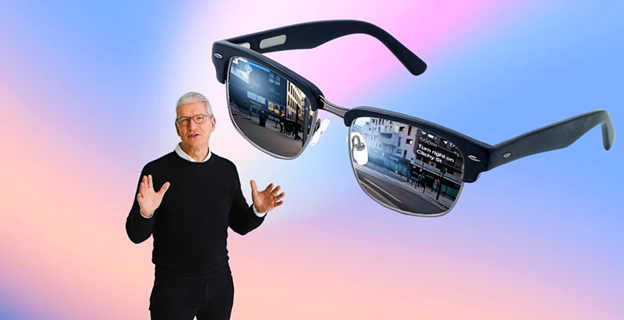
The next-generation AR (Augmented Reality) glasses are promising to be among the most anticipated consumer technology inventions. With the so-called tech giants Apple, Meta, Samsung, and Google competing to establish a position in the AR market, 2026 is expected to be a turning point in the wearable augmented devices market. These next-generation AR glasses are not merely about making the digital world superimposed on the real one, but revolutionizing the manner in which we work, communicate, and even interact with technology. As display technologies, AI implementation, and lightweight design continue to improve, the future of AR glasses will provide users with an unprecedented experience that seamlessly blends the virtual and real worlds.
The Evolution of Augmented Reality Technology
Within the last decade, augmented reality has evolved from a futuristic concept to a mainstream technology, now utilized in various sectors of the economy, including entertainment, education, healthcare, and industry. The first AR glasses were large and only served niche markets, but innovations in the optical department, battery performance, and processing units have helped make AR wearables smaller and stronger. The future version of AR glasses will be based on high-resolution displays, improved processors, and AI-assistance capabilities using micro-OLED displays, faster processors, as better interactive functionalities. This development can be attributed to the increasing desire to integrate virtual and physical spaces to develop tools that make daily chores more engaging and effective.
Expected Release Window of Next Generation AR Glasses
Although the exact release dates have not been confirmed by most companies, industry insiders and credible leaks suggest that some of the largest AR glasses models will be released towards the end of 2025 and mid-2026. In 2026, Apple is reportedly releasing its so-called Apple Glass, which will integrate with the iPhone-based ecosystem through lightweight lenses and hand gesture control. Similar to Quest and Ray-Ban smart glasses, Meta is also likely to launch its high-tech AR glasses by the first half of 2026, aimed at both productivity and entertainment. Google is also said to be recycling its AR hardware and can bring back a new version of Google Glass that is capable of live translation, navigation overlay, and AR games. Samsung, however, can launch its Galaxy Glasses in the first half of 2026 and introduce them as part of its Galaxy AI platform. The unifying factor among these manufacturers is to make AR technology accessible and viable for regular use.
Predicted Price Range and Market Positioning
The price forecast for next-generation AR glasses varies depending on the brand, features, and hardware capabilities. The initial estimates indicate that the initial price will be between 700 and 2000, depending on the extent to which it is integrated with other devices. The AR glasses made by Apple, to be more exact, are likely to be placed at the high end of the price range, between $1,500 and $2,000, just like its Vision Pro headset. Meta and Samsung can apply a more competitive pricing system by releasing devices between $800 and $1200 to appeal to mainstream customers. In the meantime, manufacturers such as Xiaomi and Oppo may also launch cheaper AR products that cost less than $700, leveraging lightweight features and smartphone integration. The above predictions represent increasingly diverse AR market divisions, with higher-end products targeting the professional and enthusiast markets, and mid-range options catering to ordinary consumers seeking a smart wearable experience.
Key Features Expected in 2026 AR Glasses
The future of AR glasses will be capable of providing a myriad of more powerful applications that will extend far beyond simple notification or map overlay apps. Developers are also aiming at high-resolution screens with the ability to display 4K images per eye, adaptive brightness to be used outdoors, and realistic color display. In-built AI assistants will support voice and gesture interaction, providing customers with control over applications, a response to messages, or real-time translation, all without physical contact with a screen. Eye-tracking will be utilized to enhance user interfaces, and onboard cameras will provide augmented overlays to facilitate navigation and object identification, as well as offer health checks. It is also predicted that the battery life and wireless charging will be major upgrades, which will eliminate one of the largest shortcomings of prior AR models. It is expected that by 2026, AR glasses will integrate the capabilities of a smartphone, computer, and an AI assistant into a seamless and wearable product.
Integration with AI and Smart Ecosystems
The next generation of AR glasses is the integration of AI. The use of AR images and AI-based personalization will enable users to enjoy a truly smart interface. Imagine strolling through a city, where your AR glasses recognize landmarks, translate foreign signs, and recommend restaurants based on your preferences —all in real-time. These gadgets will also integrate well with smartphones, smart home gadgets, and cloud systems. For example, Apple’s AR glasses will likely be integrated into the system with Siri and the Apple ecosystem, whereas Samsung’s glasses will be used in conjunction with Galaxy AI and SmartThings. The glasses that Meta will manufacture are likely to feature built-in AI companions, which will assist with scheduling, productivity, and entertainment. This integration, made possible by this ecosystem, will transform AR glasses from a self-contained device into a portal to a networked, smart life.
Applications in Everyday Life and Work
The possible applications of AR glasses are much broader than the area of novelty or entertainment. These wearables will transform the way individuals work, learn, and interact in 2026. AR glasses will facilitate real-time collaboration in the work environment through virtual screens, remote support, and 3D visualization applications. In the educational context, they are able to provide immersive learning experiences, where learners can engage with digital objects in a real-world environment. In the retail business, customers can often view the way products appear in their homes before making a purchase. AR glasses will be used by healthcare professionals for patient monitoring and surgical assistance, while travelers will utilize AR navigation and translation features. To such an extent, even social interaction is likely to change as AR avatars and virtual hangouts become more realistic, blending digital communication with the real world.
Challenges and Barriers to Widespread Adoption
Although the future is very exciting in terms of this development, some issues remain to be addressed before AR glasses can be considered mainstream, as follows. Pricing is one of the largest obstacles to overcome, as the initial target group of premium AR glasses will not be ordinary consumers but early adopters and professionals. Technical issues are also underway, including battery life with high power usage and heat management for high-performance displays and processors. Another important concern is privacy, as most AR devices have cameras and sensors that are constantly on and may inadvertently capture the environment. To ensure the protection of both users and bystanders, developers and policymakers must develop robust privacy standards. Additionally, the factors of comfort and design will be of paramount importance, as consumers require lightweight, stylish glasses that can be worn all day without causing discomfort. It is these difficulties that will define the speed with which the AR glasses become not a niche product but a necessity that every person is expected to use on a daily basis.
The Role of Competition in Driving Innovation
The high rate of development in the AR industry is driven by intense competition among leading technology firms. Every brand is vying to establish new performance, design, and cost leadership. The emphasis on high-end design and ecosystem integration at Apple will encourage other companies to refine their hardware and software experiences. The social and virtual cooperation of Meta will also be focused on, and this approach is likely to promote the development of shared AR environments. Samsung has experience in display and mobile hardware, so there is a possibility that Samsung will produce some of the most beautiful AR glasses available. In the meantime, Google and Chinese brands such as Huawei and Xiaomi will continue to seek affordable solutions that are both effective and affordable. Such a competitive environment will not only accelerate innovation but it will also enable prices to be brought down, as AR glasses are expected to become more affordable to the mass market by 2027 and beyond.
Future Outlook and Long-Term Potential
In the future, the second generation of AR glasses represents a significant step towards the future of immersive computing. With the increasing power of hardware and the further development of AI, it is likely that in the future, AR glasses will replace smartphones as the primary personal device. By the year 2030, scholars have forecasted that AR technology will be highly entrenched in our day-to-day life in areas such as shopping, education, healthcare, and entertainment. AR glasses will also be developed, which will open the door to a new generation of mixed reality applications that combine both augmented and virtual realities, creating a seamless digital experience. The anticipated 2026 releases will be seen as the start of this transition in the short term, demonstrating what can be achieved when high-tech hardware is combined with intelligent software.
Conclusion
The AR glasses release date and price projection for 2026 are the next generation, promising a bright future for wearable technology. These AR glasses will transform the process of personal computing and online communication, as leading tech giants plan to release their most advanced devices to date. A combination of high-performance displays, integration of AI, and a smooth connection chain will make augmented reality a reality in everyday life. Although there is still room to enhance issues such as pricing, privacy, and comfort, constant innovation and rivalry will continue to expand the scope of functions that AR wearables can fulfill. It is only in 2026 that the AR glasses will not be a mere prototype of something futuristic, but rather the must-have devices that transform the way we perceive the world as we know it.

